Choosing between a micro market vs vending machines can come down to much more than deciding where employees will get their afternoon snack. Both give people a convenient way to purchase food and drinks without leaving the building, but the experience is noticeably different. One lets someone grab products directly from a shelf and check out, while the other keeps everything neatly contained inside a machine. And yes, with the second option, there is always that moment of suspense while everyone watches to make sure the chips actually drop.
At EIH Distributions, we know there is no single vending setup that makes sense for every business. Available space, how many people use it, product preferences, and the experience a business wants to provide can all factor into the decision. So, what actually separates a micro market from a vending machine?
What Is the Difference Between a Micro Market vs Vending Machines?
The biggest difference is how customers access and purchase products. A traditional vending machine stores products inside an enclosed machine. The customer selects an item, completes payment, and the machine dispenses it.
A micro market operates more like a small self-service store. Products are displayed on shelves or in refrigerated equipment where customers can pick them up directly. They then pay using a self-checkout system. Both approaches are built around convenience. They simply provide it in different ways.
How a Traditional Vending Machine Works
Vending machines provide a self-contained way to sell snacks, beverages, and other products. Depending on the equipment, customers may make selections using buttons, keypads, touchscreens, or other interfaces.
Modern vending machines can also support payment options beyond bills and coins. Depending on the machine and payment hardware, customers may be able to use credit cards, debit cards, mobile wallets, and other contactless payment methods. The entire transaction happens at the machine: choose, pay, dispense, and hopefully get back to work before the next meeting starts.
How a Micro Market Works
A micro market removes the enclosed vending-machine format. Instead, customers browse products displayed on accessible shelves and in refrigerated equipment. They choose what they want and complete the purchase through a self-checkout system. That creates an experience closer to visiting a small convenience store, except customers handle the checkout themselves.
Micro Markets Give People More Room to Choose
One of the most noticeable differences between the two options is how products are displayed. Vending machines have a defined amount of space inside the equipment. Products need to fit within the machine’s available slots, shelves, or other dispensing system.
Micro markets use open shelving and refrigerated displays, depending on the setup. This format can accommodate different types of products and allows customers to physically pick something up before purchasing it.
That can be useful when someone wants to look at a product more closely before deciding. It also removes the guesswork about whether the snack in the back of the row is actually the flavor someone thinks it is. The customer can pick it up, check it out, and decide.
Of course, more variety is not automatically necessary for every location. A workplace where people primarily want drinks and familiar snacks may have very different needs from a location looking for a broader food selection.
Vending Machines Keep Things Simple
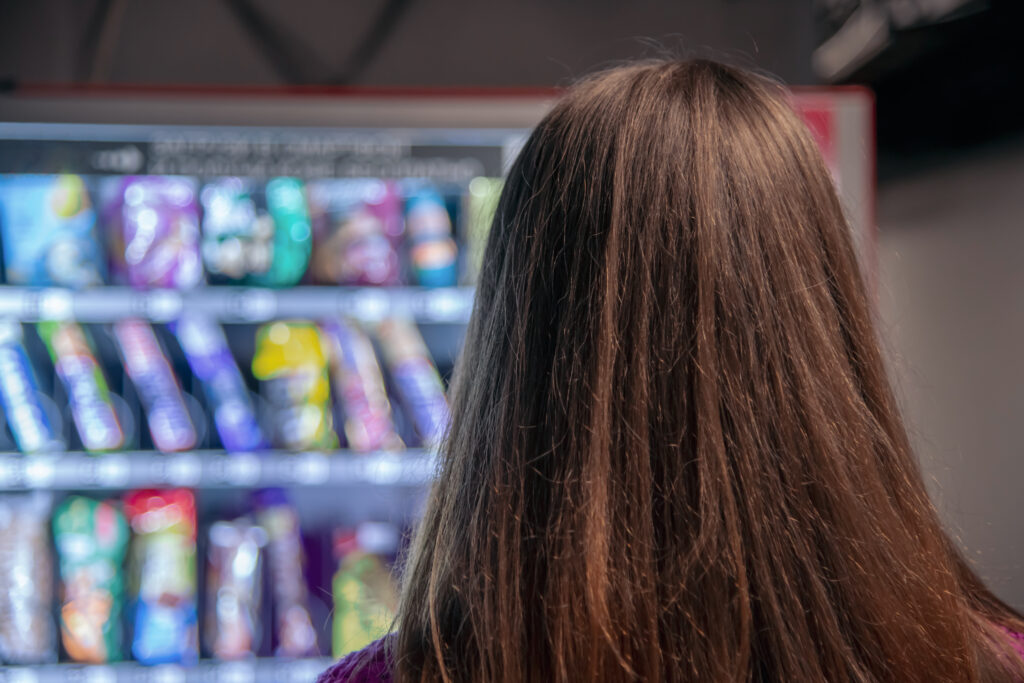
Vending machines remain such a familiar sight in workplaces, commercial buildings, waiting areas, and other facilities for a reason: they put the entire purchasing experience into one piece of equipment.
Products are contained inside the machine, customers make their selection at the machine, and payment happens there as well. For businesses with limited available floor space, that self-contained design may be an important consideration.
Modern vending machines can also include features that go well beyond the traditional cash-and-coins experience. Depending on the equipment, capabilities can include cashless payments, digital displays, connected inventory information, remote monitoring, and product delivery sensors. Traditional vending has changed quite a bit. The machine sitting in the break room today does not necessarily operate like the one someone remembers from 20 years ago.
The Stuck-Chips Problem Is Hard to Ignore
There is one vending experience almost everyone recognizes. A selection is made. Payment goes through. The spiral starts turning. The bag moves forward. Then it stops. Suddenly, several adults are standing around discussing whether staring at the machine hard enough will convince the chips to fall. The way products reach customers is an important difference when comparing micro markets and vending machines.
With a micro market, customers take products directly from the shelf or refrigerated display before completing checkout. There is no dispensing mechanism required to deliver that particular product.
Traditional vending equipment relies on its dispensing system to move the selected item to the customer. Some modern vending machines use product delivery sensors designed to detect whether an item successfully reaches the delivery area. The exact technology and response to an unsuccessful vend depend on the particular machine and system. That does not make one format automatically better than the other. It simply changes how the customer interacts with the products.
What About Payment?
Both formats are designed to let customers complete purchases without a traditional cashier, but the checkout experience is different.
Paying at a Vending Machine
With a vending machine, the customer typically pays directly at the equipment as part of the selection process. Depending on the vending machine and installed payment system, payment options may include cash, credit cards, debit cards, mobile wallets, or other contactless methods.
Cashless technology has made vending considerably more convenient for people who rarely carry bills or coins. No one should have to search through desk drawers for quarters just to buy a drink.
Checking Out at a Micro Market
At a micro market, customers select products first, then use the self-checkout system to complete the purchase. This format also allows someone to select multiple products from the available displays and purchase them together rather than making an individual vending selection for each item. The exact checkout process and available payment options depend on the system being used.
How Much Space Does Each Option Need?
Available space can play a major role in deciding between a micro market and a vending machine. A vending machine has a defined physical footprint. A business needs enough room for the equipment itself as well as appropriate access for customers and servicing.
A micro market is a different type of setup. Depending on its design, it may use shelving, refrigerated displays, checkout equipment, and space for customers to browse and move around. That means the question is not simply, “Which one looks better?” It is also, “What can realistically fit here without turning the break room into an obstacle course?”
Businesses should look at the actual space available and consider how people already move through it. A refreshment area should make the workplace more convenient, not create another traffic jam between the coffee machine and the refrigerator.
Think About How Many People Will Actually Use It
Another consideration is how many employees, customers, visitors, or other people will likely use the setup. There is no universal number that automatically determines whether a business needs one format or another. Workplace size is only part of the picture.
Usage can also depend on factors such as:
- How many people are regularly at the location
- How often employees or visitors purchase snacks and drinks
- What types of products people want
- Available space
- When the facility is occupied
- Whether people have convenient food options nearby
- The type of experience the business wants to provide
A smaller workplace with frequent demand can have different needs from a larger location where relatively few people use vending equipment. The goal should be to choose a setup based on how people will actually use it rather than simply choosing whichever option sounds newer.
Can a Business Have Both?
Micro markets and vending machines do not necessarily have to be viewed as complete opposites. Large facilities can have different refreshment needs in different areas. The setup that works in one part of a property may not necessarily be appropriate everywhere else.
What matters is understanding the purpose of the equipment and the people using it. Instead of starting with the assumption that one format has to replace the other, businesses can look at their space, traffic, product needs, and desired customer experience to determine what type of setup makes sense for a particular location.
So, Which Setup Fits Your Business?
When comparing a micro market vs vending machines, start with the workplace rather than the equipment. How much space is actually available? How many people are likely to use the service? What do they want to buy? Is a broad selection important, or would a straightforward snack and beverage option meet the need? How do people move through the space?
Those questions provide a much more useful starting point than simply asking which option is newer. Vending machines provide a contained purchasing experience in a defined piece of equipment, while micro markets create an open self-service shopping environment. Each format comes with different space, equipment, product, and customer-experience considerations. And if employees are currently exchanging warnings about which vending-machine slot likes to hold chips hostage, it may also be a good time to look at the equipment itself.
Find the Right Vending Setup With EIH Distributions
At EIH Distributions, we understand that vending equipment needs to make sense for the people using it and the business providing it. There is no reason to choose equipment based on guesswork or a list of features that may not even matter for a particular location. We help businesses explore vending machines and equipment with the space, expected usage, product needs, and customer experience in mind.
Because whether someone wants a morning drink or the emergency 3 p.m. bag of chips, the goal is pretty simple: make getting it convenient. Ready to explore vending options for your workplace or facility? Contact EIH Distributions to discuss your needs.
Micro Market vs Vending Machines FAQs
What is the difference between a micro market and a vending machine?
A vending machine stores products inside enclosed equipment and dispenses a customer’s selection. A micro market displays products on accessible shelves or in refrigerated equipment and uses a self-checkout system for purchases.
How does a micro market work?
Customers browse available products, take the items they want, and complete their purchase using the market’s self-checkout system. Specific equipment and checkout processes vary between setups.
How do customers pay at a micro market?
Micro markets use self-checkout systems. The specific payment methods available depend on the system installed.
Do micro markets offer more products than vending machines?
Product capacity and selection depend on the specific setup. Micro markets can use multiple shelves and refrigerated displays, while vending-machine capacity depends on the size, type, and configuration of the machine.
How much space does a micro market require?
There is no single space requirement that applies to every micro market. Space needs depend on the shelving, refrigeration, checkout equipment, layout, and other components included in the setup.
Are vending machines still a good option for businesses?
Vending machines continue to provide a self-contained way for employees, customers, and visitors to purchase snacks, drinks, and other products. Whether vending equipment fits a business depends on factors such as available space, expected usage, product needs, and desired features.
Can modern vending machines accept cashless payments?
Many modern vending machines can support cashless payment hardware. Depending on the equipment and payment system, available options may include credit cards, debit cards, mobile wallets, and other contactless payments.
Can a business use both a micro market and vending machines?
Different areas of a facility can have different refreshment needs. Whether multiple types of equipment are appropriate depends on the property’s layout, traffic, available space, and other operational considerations.
What types of businesses can use micro markets?
Micro markets may be considered for workplaces and other commercial environments with appropriate space and a need for self-service food and beverage access. The suitability of a particular setup depends on the individual location.
How should a business choose between a micro market and vending machines?
Businesses can consider available floor space, expected number of users, desired product selection, checkout experience, equipment requirements, and how employees, customers, or visitors are likely to use the service.