Think about the last time you reached for cash at a vending machine. Chances are, it has been a while. The way people pay for everyday purchases has shifted, and the vending industry has had to keep up. Today, a contactless payment vending machine is not a fancy add-on reserved for high-end locations. It is the baseline expectation for businesses that want to provide a convenient, modern experience to employees, residents, and guests.
If your machines still rely on coins and dollar bills, there is a good chance you are leaving purchases on the table.
Why Did the Contactless Payment Vending Machine Become the Norm?
The shift happened faster than most people expected, and a few things combined to drive it forward.
Mobile wallets became widely adopted. Apps like Apple Pay and Google Pay made it easy to pay with a phone in seconds, and consumers started expecting that same ease everywhere, including at vending machines. The COVID-19 pandemic also accelerated things. People became more aware of shared surfaces, and contactless options gave them a way to buy without that concern. That habit has stuck around long after the immediate worry faded.
Beyond that, younger consumers have largely grown up without cash. For them, paying with a phone or card is simply second nature, and they make up a growing share of today’s workforce.
What Does a Contactless Payment Vending Machine Offer?
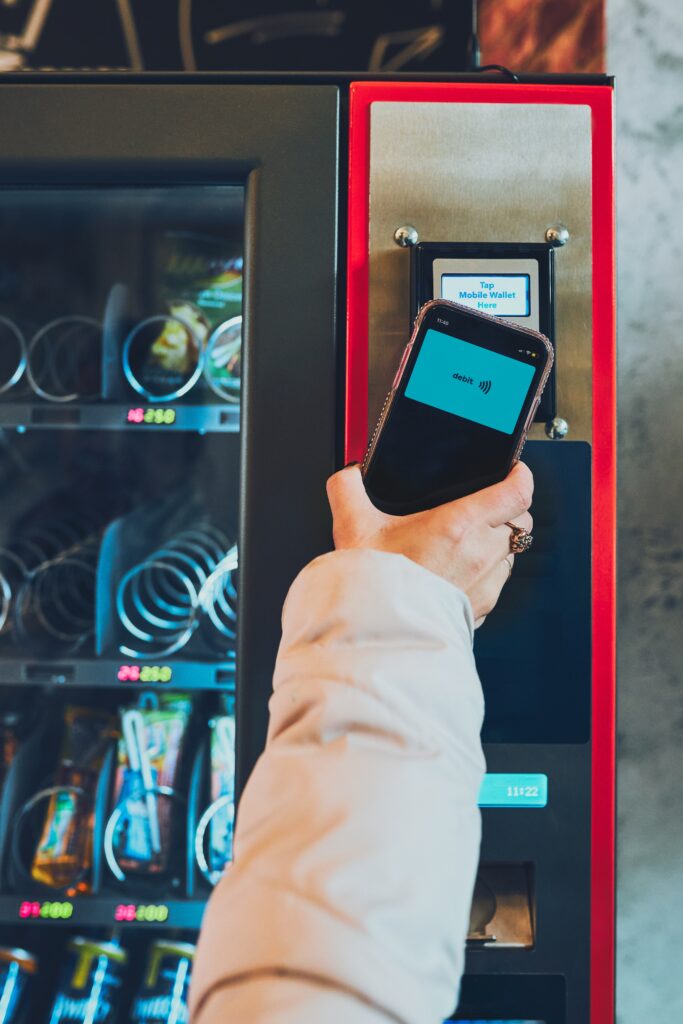
It goes beyond just skipping coins. A contactless payment vending machine typically supports several ways to pay, making the buying experience faster and more accessible.
Most modern machines support the following:
- Credit and debit card transactions using chip or tap technology
- Mobile wallet payments through Apple Pay, Google Pay, and similar apps
- Contactless card tapping without inserting the card at all
This flexibility matters because different people have different preferences. When a machine supports all of these methods, fewer purchases are abandoned out of frustration.
What About Speed?
A tap or wave typically completes in under two seconds. Compare that to digging for exact change or waiting for a chip reader to process. In a busy office or gym where people have limited break time, that difference adds up quickly.
Does a Contactless Payment Vending Machine Matter for Your Specific Location?
The answer is yes, regardless of what type of property you manage. For offices, employees are already paying for snacks and drinks using their phones. A machine that cannot match that expectation will get ignored. An office vending machine service that includes contactless payment keeps the machine relevant and frequently used.
For gyms, members rarely carry a wallet to the gym floor. A contactless payment vending machine means someone can grab a protein bar using the phone on their arm without any friction.
For apartment buildings, residents increasingly view vending machines as a building amenity. When the machine feels modern and easy to use, it reflects positively on the property itself. Hotels and warehouses follow the same logic. The environment changes, but the expectation stays consistent.
Understanding how vending machines can be customized to match the needs of a specific location helps businesses make smarter decisions about the type of service they choose.
How Do Contactless Payments Affect Revenue and Performance?
Machines that accept only cash are limited by what people happen to be carrying, which is less and less every year. When more payment types are accepted, more purchases are completed. Vending industry data has consistently shown that cashless machines generate higher average sales than cash-only machines, largely because users face fewer barriers at the point of purchase.
Fewer Abandoned Transactions
One often-overlooked cost of an outdated machine is the abandoned purchase. Someone walks up, wants a drink, does not have the right change, and leaves. That is a lost sale, and a frustrating experience. With contactless payment, that scenario rarely happens.
Simpler Maintenance and Accounting
Cash handling adds complexity to machine servicing. Coin jams, bill acceptor issues, and physical cash collection are ongoing costs in both time and labor. With a machine that processes digital payments, transactions are logged electronically, which makes accounting cleaner and service visits more efficient.
For businesses exploring smart vending machines, this benefit goes even further. These machines often pair contactless payment with real-time inventory tracking and remote monitoring, creating a much more efficient overall system.
Why Businesses Are No Longer Treating This as Optional
There was a time when contactless payment was a selling point, something a vending provider might highlight as a premium feature. That time has passed.
Today, when a business or property manager evaluates vending options, contactless payment is simply expected. It is part of the foundation, similar to expecting the machine to be clean and well-stocked. Properties with outdated machines often hear from employees or residents that the machine feels frustrating or is not worth using.
When a machine works the way people expect, it gets used consistently. That is good for the people in the building, and it strengthens the relationship between the property and its vending provider. Learning more about what modern vending service looks like can help businesses set the right expectations from the start.
Ready to Bring Your Vending Setup to the Current Standard?
At EIH Distributions, we provide fully managed contactless payment vending machine solutions for businesses and properties throughout New Jersey. Our machines support modern payment methods, including mobile wallets and cashless transactions, so your employees, residents, and guests can pay the way they prefer every time.
We handle everything: placement, stocking, maintenance, and service, with no equipment costs or hidden fees. If your current vending setup is not meeting the expectations of today’s users, we would be glad to help. Explore our vending machines or contact our team today to get started with a free consultation!
Contactless Payment Vending Machine FAQs
It is a vending machine that accepts payments without cash, allowing users to pay by tapping a card or using a mobile wallet like Apple Pay or Google Pay.
Cash use continues to decline. Machines that only accept cash miss a significant portion of potential purchases from people who no longer carry it regularly.
Generally, yes. Fewer payment barriers mean fewer abandoned transactions, which leads to higher overall sales compared to cash-only machines.
Offices, gyms, apartment buildings, hotels, and warehouses all benefit because users in these spaces typically carry phones or cards rather than cash.
Digital payments reduce cash handling, minimize mechanical issues like coin jams, and allow transactions to be tracked electronically for cleaner accounting.
Yes. Most businesses and property managers now treat contactless payment support as a basic requirement when choosing a vending provider, not an optional upgrade.